


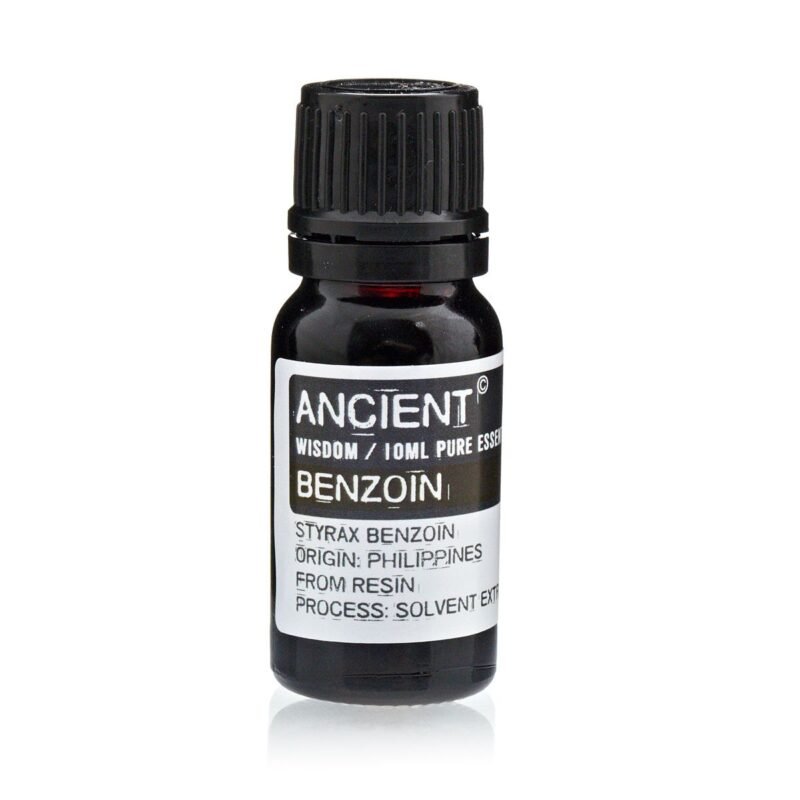
10 ml Benzoin Essential Oil (Dilute/Dpg)
£3.50Latin Name : Styrax Benzoin
Part Of Plant Used : Resin
Source : Philippines
Extraction Method : Steam Distillation
The benzoin resin is antifungal, anti-spasmodic, anti-inflammatory, and a mild expectorant. It regenerates the skin and is an excellent healing agent. At the psychic level, it is relaxing, reassuring and anxiolytic. Internally, benzoin can be used against coughing.
It helps uplift your spirit and is comforting when lonely, sad, alienated, depressed and bereaved.
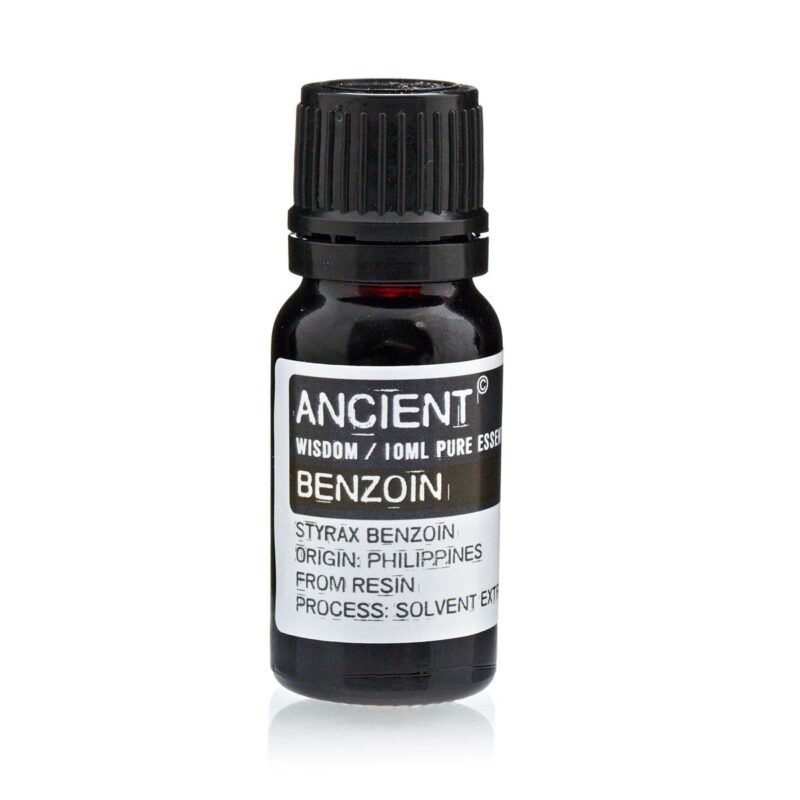
10 ml Benzoin Essential Oil (Dilute/Dpg)
£3.50Latin Name : Styrax Benzoin
Part Of Plant Used : Resin
Source : Philippines
Extraction Method : Steam Distillation
The benzoin resin is antifungal, anti-spasmodic, anti-inflammatory, and a mild expectorant. It regenerates the skin and is an excellent healing agent. At the psychic level, it is relaxing, reassuring and anxiolytic. Internally, benzoin can be used against coughing.
It helps uplift your spirit and is comforting when lonely, sad, alienated, depressed and bereaved.
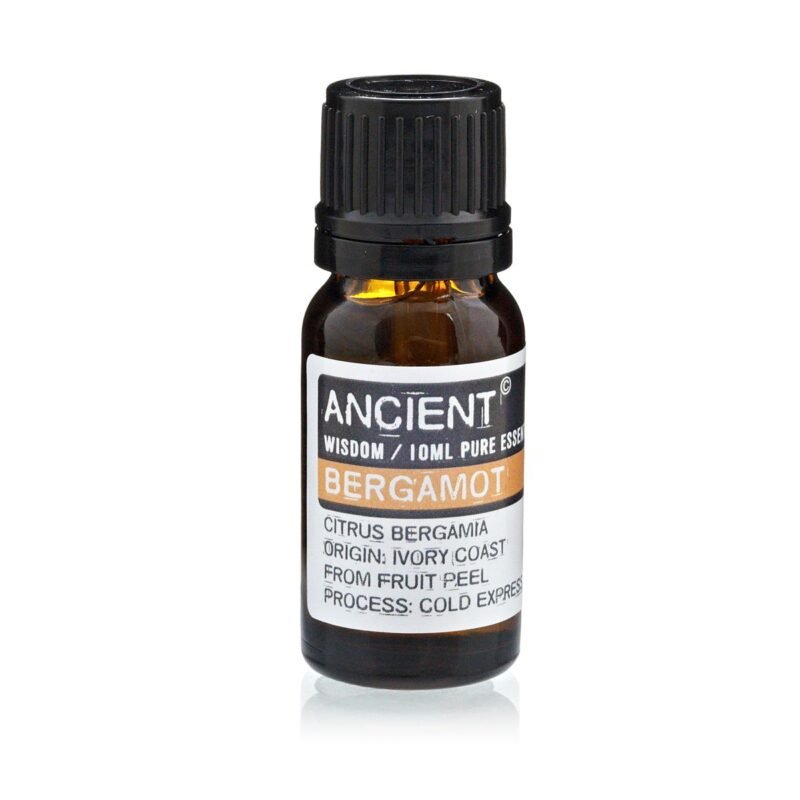
10 ml Bergamot (FCF) Essential Oil
£3.25Latin Name : Citrus Bergamia.
Part Of Plant Used : Fruit Peel
Source: Italy.
Extraction Method : Cold Expression.
Bergamot Essential Oil is extracted by expression from the ripe as well as unripe fruits of the bergamot orange tree. This essential oil that smells citrus-like yet sweet, is great for creating a relaxed and happy feeling. It is useful in the treatment of urinary tract infections, skin troubles, and boosts the functions of the liver, spleean and stomach.
Bergamot essential oil is used in aromatherapy to treat depression, stress, tension, low self-confidence, fear, and hysteria. It is useful in healing skin infections like general wounds, psoriasis, cold sores, and eczema. This oil is said to help those suffering from SAD (Seasonal Affected Disorder), PMS, compulsive eating, postnatal depression, colds, and flu. Bergamot oil is a favourite in aromatherapy and is used in vaporisers, massages, and blended into bath water. Experts advice caution when using this oil on sensitive skin if it is exposed to sunlight after application, as this may cause burns. Keep out of the sun if this oil has been used on the skin.
The name Bergamot is derived from the city Bergamo in Lombardy, Italy, where the oil was first sold. It has been grown since the 16th century in the Mediterranean countries like Italy and Greece. It's been used in the perfume and food industries (Earl Grey tea) for a long time. While essential oil has begun to be extracted more recently, the fruit, and its essence and flavour have been used in traditional medicine for hundred of years.
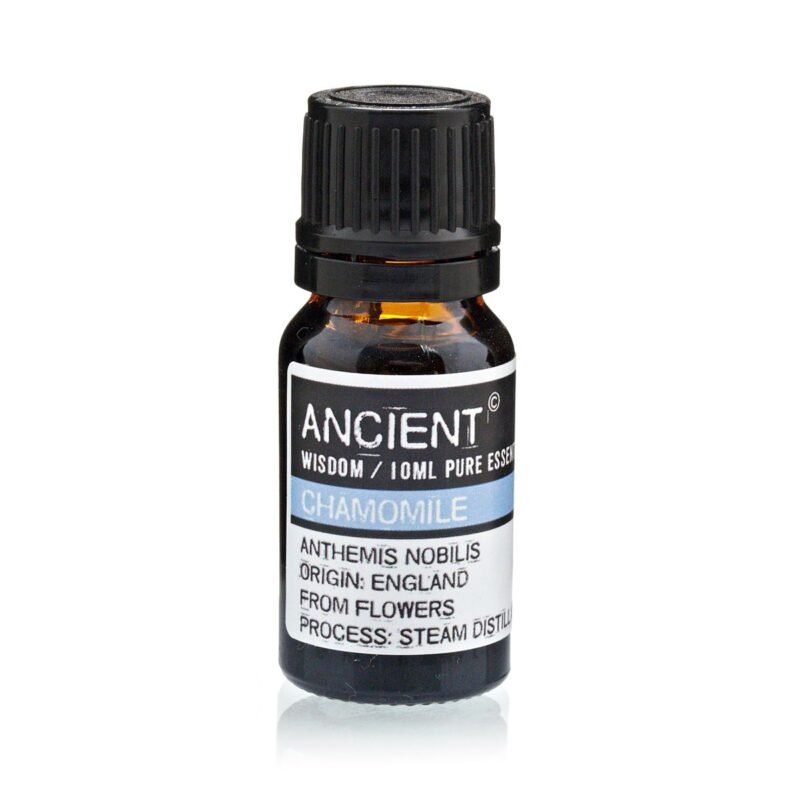
10 ml Chamomile Roman (P) Essential Oil
£30.75Latin Name : Anthemis Nobilis.
Part Of Plant Used : Flowers
Source : England.
Extraction Method : Steam Distillation.
Roman chamomile yields an essential oil that is light blue when fresh. It can be extracted from the flower and the upper parts of the plant. It has excellent calming properties, and is said to ease irritation, impatience and help PMS and other menstrual and menopausal problems. Roman chamomile is an evergreen with a fresh apple smell, and is mainly grown in France, Belgium, and Eastern Europe.
This herb is excellent for skin problems like acne, eczema,rashes, wounds, dermatitis, dry/itchy skin and any allergies. It is said to be good for abdominal pain, gall bladder problems, and throat infections, and helps relieve allergies, hay fever, and asthma. This oil is useful in diluted solutions to calm children suffering from colic, irritability, diarrhoea, and teething. In a vaporiser, it calms headaches, nervous complaints, and migraines. While this oil is gentle enough for use with children and babies, always consult an expert before administering it.
The medicinal use of chamomile dates back thousands of years to the ancient Egyptians, Romans, and Greeks. The Egyptians dedicated it to the sun god. A papyrus document dating to 2800 BC records the use of chamomile to treat skin disorders. Chamomile oil was used to embalm bodies. Hippocrates, the great Greek physician, is said to have used chamomile as a herbal remedy. In mythology, chamomile is one of the nine sacred herbs given by Wodan, the god of the underworld, to mortals to improve their lives.
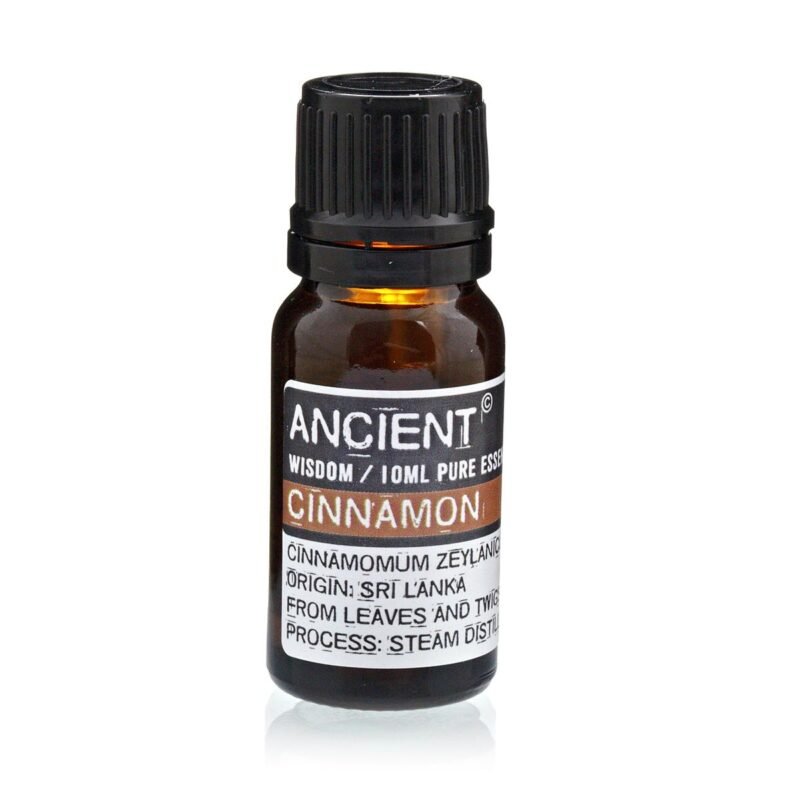
10 ml Cinnamon Essential Oil
£2.90Latin Name : Cinnamomum Zeylanicum.
Part Of Plant Used : Leaves & Twigs
Source : Sri Lanka.
Extraction Method : Steam Distillation.
Cinnamon Essential Oil is extracted by steam distillation from the Cinnamomum zeylanicum tree, also called Ceylon cinnamon or true cinnamon. There are two kinds of essential oils extracted: one from the leaves, which is gentler, yellow to light brown, and most often used in aromatherapy; and the other from the bark, which is darker brown and not commonly preferred in aromatherapy.
Cinnamon oil is a calming one with powerful antiseptic properties. When used in an oil burner, this oil is said to help colds and bronchitis, and lift depression. It's
used to assist with bronchitis, diarrhoea, chills, infections, flu, rheumatism, and arthritis when used in bath water or blended into a massage oil. It eases nausea and vomiting. It stimulates the glandular system and therefore reduce menstrual pain. Avoid the leaf oil during pregnancy. The bark oil is very strong and should only be used diluted, under expert supervision.
The cinnamon tree is native to the Indian subcontinent and has been an important item of trade for centuries between India, China, and Egypt. The source of cinnamon was a mystery to the Western world for the longest time. According to Herodotus and other authors, Arabia was the source of cinnamon. The story goes that giant Cinnamon birds collected cinnamon sticks for their nests from a mysterious place where cinnamon trees grew. The Arabs then tricked the birds and got the cinnamon from them. This was the belief up to 1310 in Byzantium.
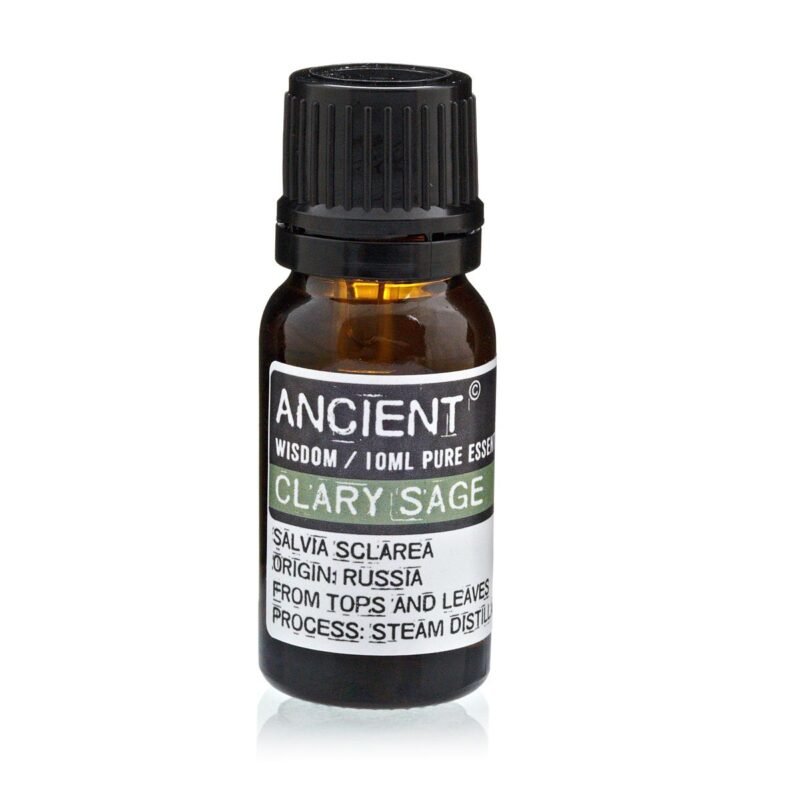
10 ml Clary Sage Essential Oil
£6.25Latin Name : Salvia Sclarea
Part of Plant Used : Tops and Leaves.
Source : Russia.
Extraction Method : Steam Distillation.
Clary Sage Essential Oil has sedative abilities that induce feelings of relaxation, clarity, and calmness while alleviating dizziness, anxiety, and irritability. It is also known to stimulate libido in both men and women.
Clary Sage Essential Oil has earned the nickname “The Woman’s Oil,” due to its benefits for women’s health, especially in relation to menstruation and menopause.
Clary Sage oil calms and soothes the skin. Clary Sage oil can also be applied to promote healthy-looking hair and scalp. If used aromatically, Clary Sage oil promotes feelings of relaxation in preparation for a restful night’s sleep.
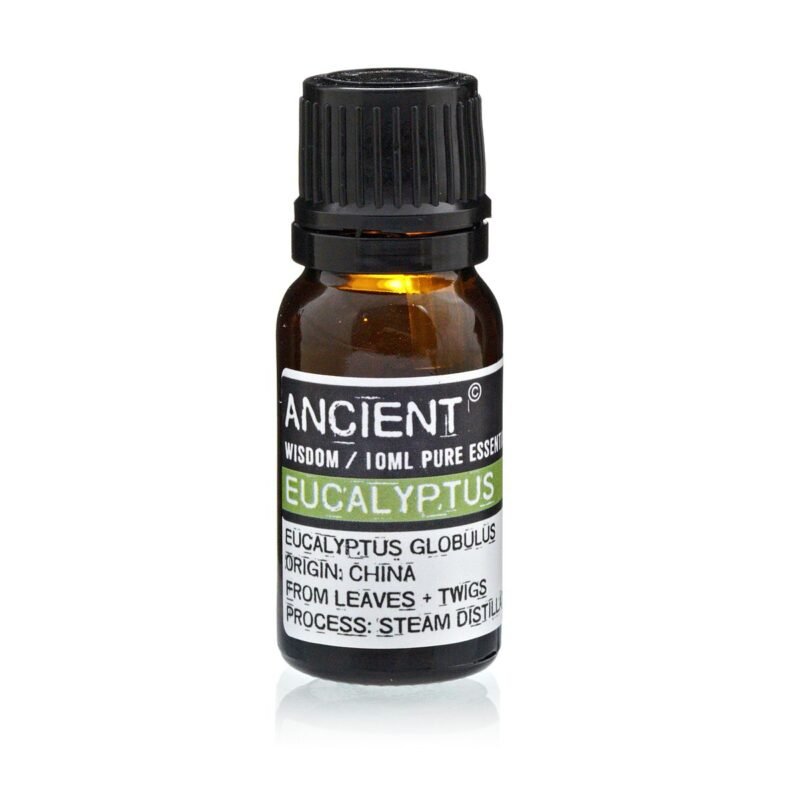
10 ml Eucalyptus Essential Oil
£2.15Latin Name : Eucalyptus Globulus.
Part Of Plant Used : Leaves & Twigs
Source : China.
Extraction Method : Steam Distillation.
Eucalyptus Essential Oil is a concentrated liquid containing volatile aromacompounds from the Eucalyptus Globulus Tree. It is usually
distilled, sometimes expressed or solvent extracted. Eucalyptus essential oil is said to be antibacterial, disinfectant and an analgesic. It has been used to relieve coughs, colds, and other such respiratory troubles. It soothes muscle and joint pains, and helps to heal wounds, burns, ulcers and insect bites. In
aromatherapy eucalyptus is said to promote activity, vitality, and energy.
For respiratory troubles, a few drops of this oil placed on a cloth can be inhaled through the mouth and exhaled through the nose
for half a minute. It is applied directly on sores, rashes and insect
bites. Add a few drops to your bath water to feel invigorated and
refreshed. Soak your sore feet in a basin of warm water with 4-5
drops of this oil for relief. A few drops of oil in a diffuser is said to
kill germs and airborne bacteria, a good idea for a sickroom.
Eucalyptus essential oil is for external use only; always consult an authorised practitioner when using it as a health remedy.
Essential oils have been understood to have played a role in healing in ancient times in Egypt, China, and other parts of the world. They are said to be the oldest form of medicine and cosmetic, since they are distilled from plants, not involving complicated processes or machinery, but an art nonetheless. For their healing and aromatic properties, they were considered more valuable than gold to the ancients.
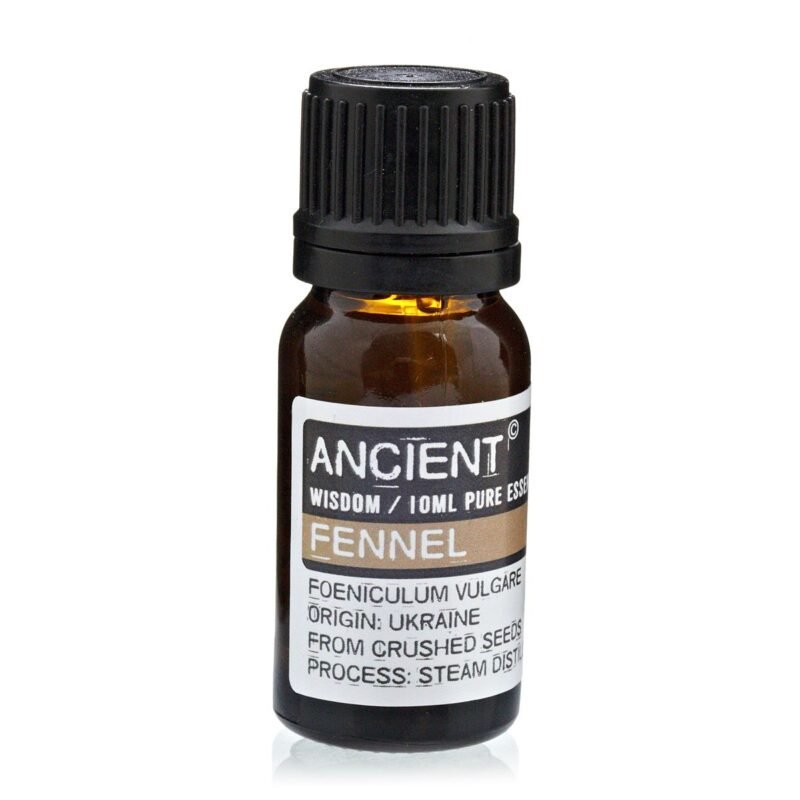
10 ml Fennel Essential Oil
£4.00Latin Name : Foeniculum Vulgare.
Part Of Plant Used : Crushed Seeds.
Source : Ukraine.
Extraction Method : Steam Distillation.
Fennel Essential Oil is extracted from the plant Foeniculum vulgare var. dulce, which is sweet fennel, also known as Roman fennel. It is extracted from the crushed seeds by steam distillation. The oil, like the seeds, is good for digestion as well as a host of other ailments. It is used in aromatherapy to treat oily skin, wrinkles, and obesity. It is said to boost courage, resolve, and strength.
This oil is a popular remedy for digestive problems like flatulence, constipation, colic, nausea, vomiting, anorexia, and dyspepsia. It also helps in weight loss as it is said to promote the feeling of a full stomach. Its diuretic effect is believed to help disperse cellulite. Fennel oil is supposed to tone the spleen and liver. It has a cleansing and toning effect on the skin, and helps with bruises. Please note, this oil should not be used in large doses, and should avoided altogether in pregnancy, lactation, and those suffering from breast cancer, and epilepsy.
The word Fennel is derived from the Latin 'foenum,' meaning 'hay'. In medieval times, it was known as 'Fenkle'. It was a popular herb used by the ancient Chinese, Egyptians, and Romans, who believed that fennel helped give longer life, and improved a person's courage and strength. It was also believed to keep away evil spirits. It is said that fennel was used to strengthen eyesight, to cure snakebites, and ease colic. In India, plain, roasted or mint-coated fennel seeds, called 'saunf' are often served after meals to help digestion.
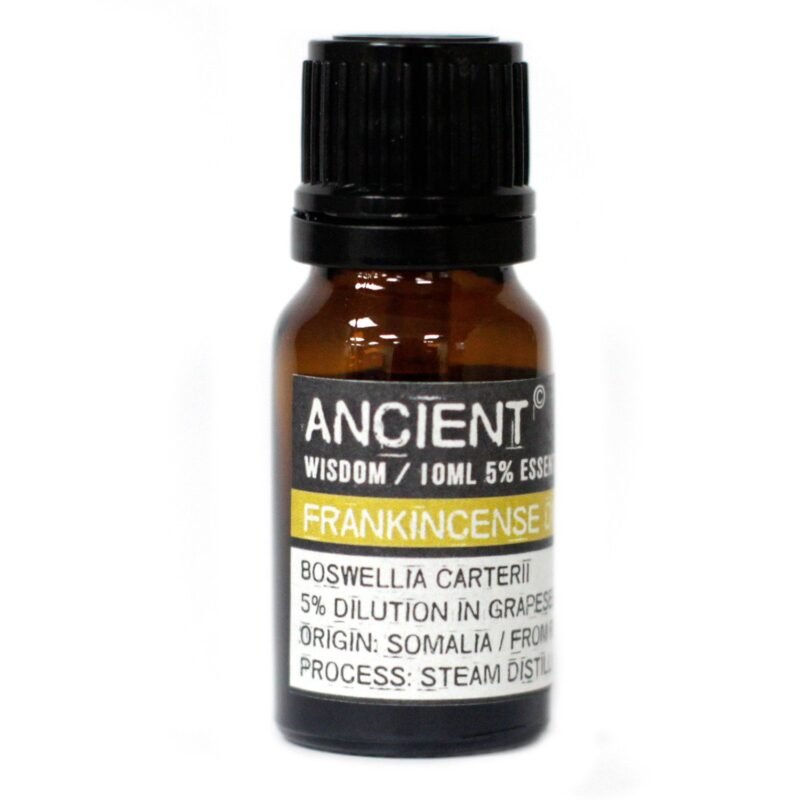
10 ml Frankincense (D) Essential Oil
£2.50Latin Name : Boswellia Carterii.
Part Of Plant Used : Resin.
Source : Somalia.
Extraction Method : Steam Distillation.
5% Dilution in Grapeseed Oil
This Frankincense Essential Oil is steam distilled from the resin of the Boswellia carterii tree, of the Burseraceae family, and is also known as Olibanum. The word is derived from the French franc meaning luxuriant, and was, along with myrrh, the first gum to be used as incense. The tree is indigenous to the Middle East, and is said to exist in natural bonsai formation in that parched land. Frankincense is said to symbolize divinity.
This oil is the most popular in aromatherapy for its calming properties. It is said to help heal wounds and prevent scars. It is used to tone the face, remove wrinkles, and avoid stretch marks in cosmetic products. Frankincense essential oil has been used to ease anxiety, stress, asthma, bronchitis, laryngitis, and bad coughs. It is a general tonic to the uterus, has a calming effect during labour, and helps ease heavy menstruation. It is most useful during meditation. Avoid during pregnancy.
Ancient Egyptians burned frankincense as holy incense and used it as a face mask. They ground the burnt resin into a powder called kohl, used to highlight the eyes. Kohl-lined eyes are commonly seen in Egyptian art. The earliest record of frankincense use was found in a tomb inscription of the 15th century BC Egyptian queen Hatshepsut. It was used to fumigate the sick, to banish evil spirits.
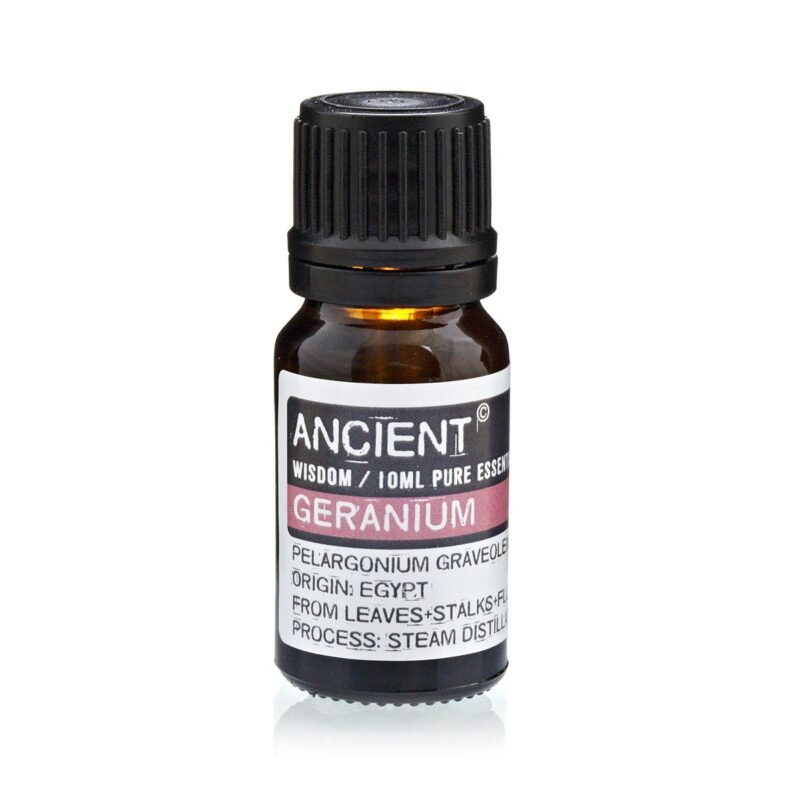
10 ml Geranium Essential Oil
£6.25Latin Name : Pelargonium Graveolens.
Part Of Plant Used : Leaves, Stalks & Flowers.
Source : Egypt.
Extraction Method : Steam Distillation.
Geranium Essential Oil is steam distilled from the leaves and stalks of the plant Pelargonium odoratissimum (apple geranium). It has a strong smell with a floral aroma, and hints of mint and apple. The main feature of this oil is its ability to balance and uplift, and it is used to do both on the mind and body, to ease a host of ailments.
Geranium essential oil helps balance oily and dry skin, and also brings about balance of the mind, relieving stress and anxiety. It is said to work on the adrenal cortex, which has a balancing effect on the hormone system. Geranium oil has
been used to treat acne, bruises, burns, cuts, dermatitis, eczema, haemorrhoids, ringworm, ulcers, breast engorgement, oedema, poor circulation, sore throat, tonsillitis, PMS, menopausal problems, stress, and neuralgia. Its strong smell
chases away mosquitoes. Add a few drops to shampoo to get rid of head lice.
These geraniums were believed to keep away spirits (like they did mosquitoes!) and so they were planted around houses as hedges. The plants originated from South Africa, Reunion, Madagascar, Egypt, and Morocco and were introduced to European countries in the 17th century. Although there are about 700 varieties of the plant, only 10 supply essential oil in viable quantities. The varieties planted in gardens usually produce too little oil to use for extraction.
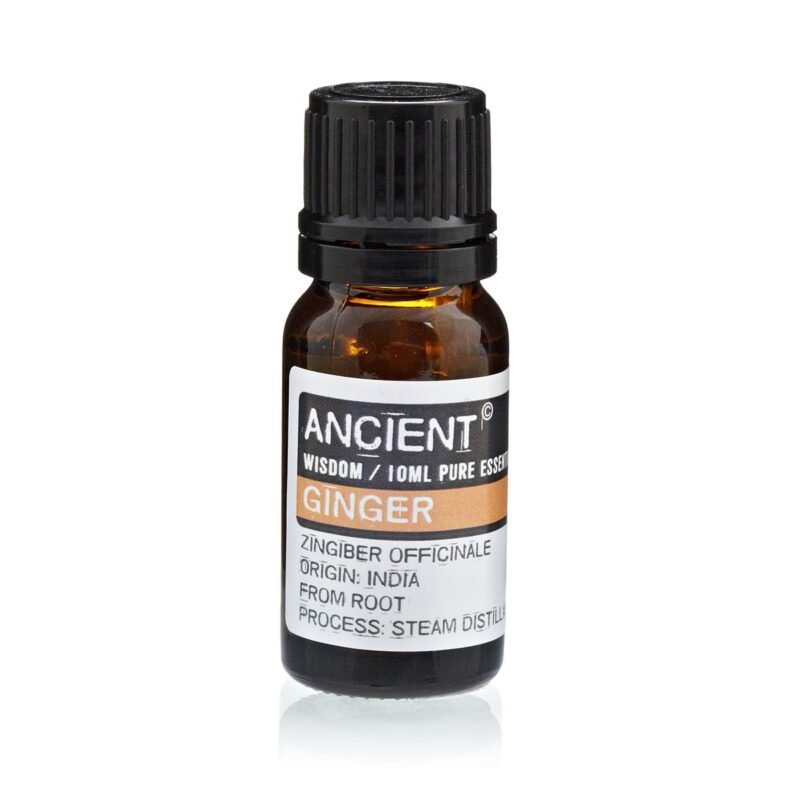
10 ml Ginger Essential Oil
£3.95Latin Name : Zingiber Officinale.
Part Of Plant Used : Root.
Source : India.
Extraction Method : Steam Distillation.
Ginger Essential Oil is extracted from the Zingiberaceae officinale plant, also known as Common or Jamaica Ginger. The name ginger is derived from the place called Gingi in the state of Tamil Nadu, India, and the Tamil word for ginger, inji-ver. The oil is extracted by steam distillation from the unpeeled or dried, ground-up root of the plant. It is a warming oil and is particularly good for digestion and fighting nausea and vomiting.
Ginger oil has many therapeutic properties. It is used in the treatment of fractures, soothing the pain of rheumatism, arthritis, and carbuncles. It helps with hangovers, motion sickness, colds, flu, coughs, sinusitis, sore throat, skin sores, diarrhoea, colic, cramps, chills and fever. Used in a vaporiser, this oil fights loneliness and depression, and its energizing properties make it a good aphrodisiac. Put a drop of oil on a handkerchief and inhale to control nausea, motion sickness, and colds.
Ginger has its origins in India, China, and Java, but is also native to Africa and West Indies. Sanskrit and Chinese texts mention the use of ginger as medicine. It is also mentioned in ancient Greek, Roman, and Arabian literature. Dried ginger is used for stomach aches, diarrhoea, throat problems, and nausea. The Chinese also use it to boost the heart and to reduce mucus and phlegm.
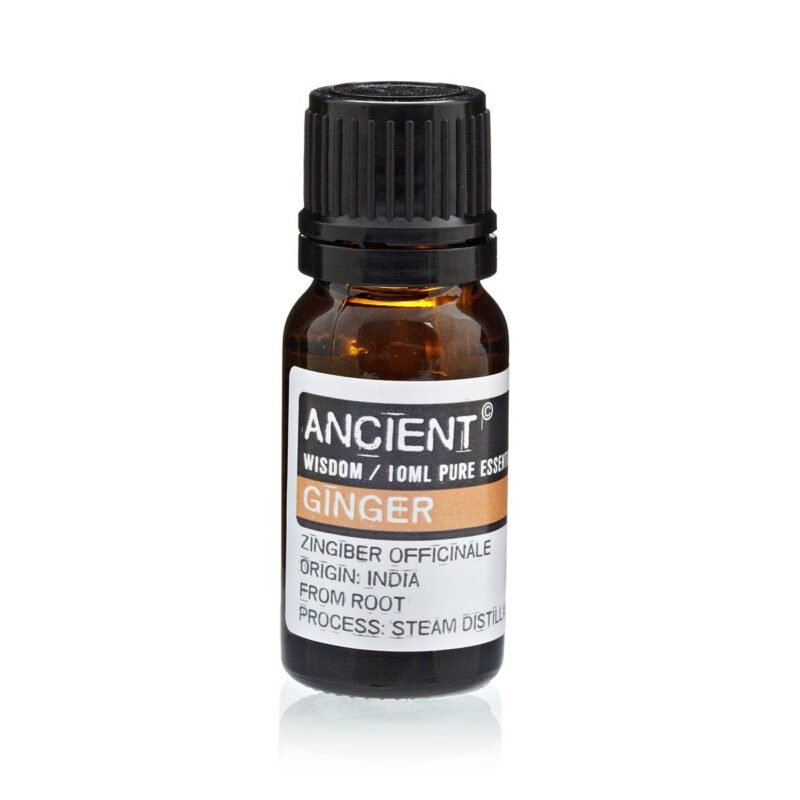
10 ml Ginger Essential Oil
£3.95Latin Name : Zingiber Officinale.
Part Of Plant Used : Root.
Source : India.
Extraction Method : Steam Distillation.
Ginger Essential Oil is extracted from the Zingiberaceae officinale plant, also known as Common or Jamaica Ginger. The name ginger is derived from the place called Gingi in the state of Tamil Nadu, India, and the Tamil word for ginger, inji-ver. The oil is extracted by steam distillation from the unpeeled or dried, ground-up root of the plant. It is a warming oil and is particularly good for digestion and fighting nausea and vomiting.
Ginger oil has many therapeutic properties. It is used in the treatment of fractures, soothing the pain of rheumatism, arthritis, and carbuncles. It helps with hangovers, motion sickness, colds, flu, coughs, sinusitis, sore throat, skin sores, diarrhoea, colic, cramps, chills and fever. Used in a vaporiser, this oil fights loneliness and depression, and its energizing properties make it a good aphrodisiac. Put a drop of oil on a handkerchief and inhale to control nausea, motion sickness, and colds.
Ginger has its origins in India, China, and Java, but is also native to Africa and West Indies. Sanskrit and Chinese texts mention the use of ginger as medicine. It is also mentioned in ancient Greek, Roman, and Arabian literature. Dried ginger is used for stomach aches, diarrhoea, throat problems, and nausea. The Chinese also use it to boost the heart and to reduce mucus and phlegm.
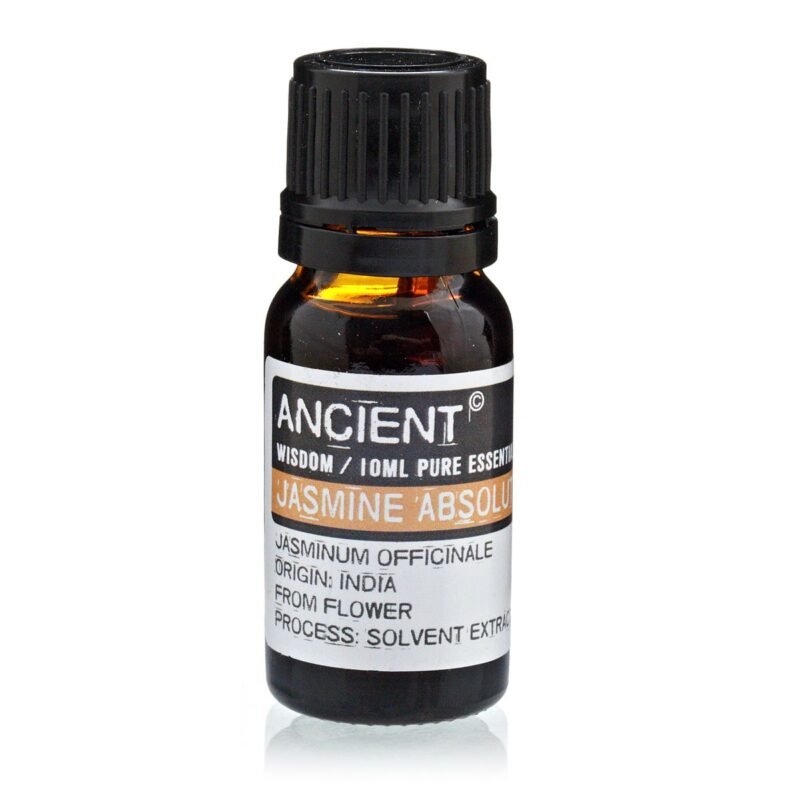
10 ml Jasmine Absolute Essential Oil
£107.40Latin Name : Jasminum Officinale.
Of Flower Used : Flower
Source : India.
Extraction Method : Steam Distillation.
Jasmine is a delicate, evergreen climber native to China and India with small, white, star-shaped flowers, which are picked at night, when their fragrance is the most powerful. This Wholesale Jasmine Essential Oil has a sweet, exotic and richly floral smell. It is expensive, as its distillation is more elaborate than for most oils, and is used to deeply relax, lift depression and increase confidence.
This oil is said to soothe the nerves and produce a feeling of confidence and optimism, while also restoring energy. It reduces childbirth time by strengthening contractions and easing pain. It is believed to relieve impotence, frigidity, and premature ejaculation due to its soothing and calming properties. It helps cough and laryngitis and is also useful in a massage oil to ease muscle pain, sprains, and stiff limbs. Jasmine oil tones dry, oily, or sensitive skin, increases elasticity and is said to reduce stretch marks and scarring.
The jasmine has been considered a holy flower in India for hundreds of years and is strung together to make garlands for Hindu gods and Goddesses till today. Jasmine is commonly worn in the hair by Indian women and the one of the main flowers in wedding garlands as well. According to a myth, the sun god, Surya, rejected a princess's love and she was so heartbroken that she killed herself. From her ashes scattered on the ground, a jasmine plant grew. Since the sun god caused her so much pain, the jasmine flower only bloomed and released its perfume at night.
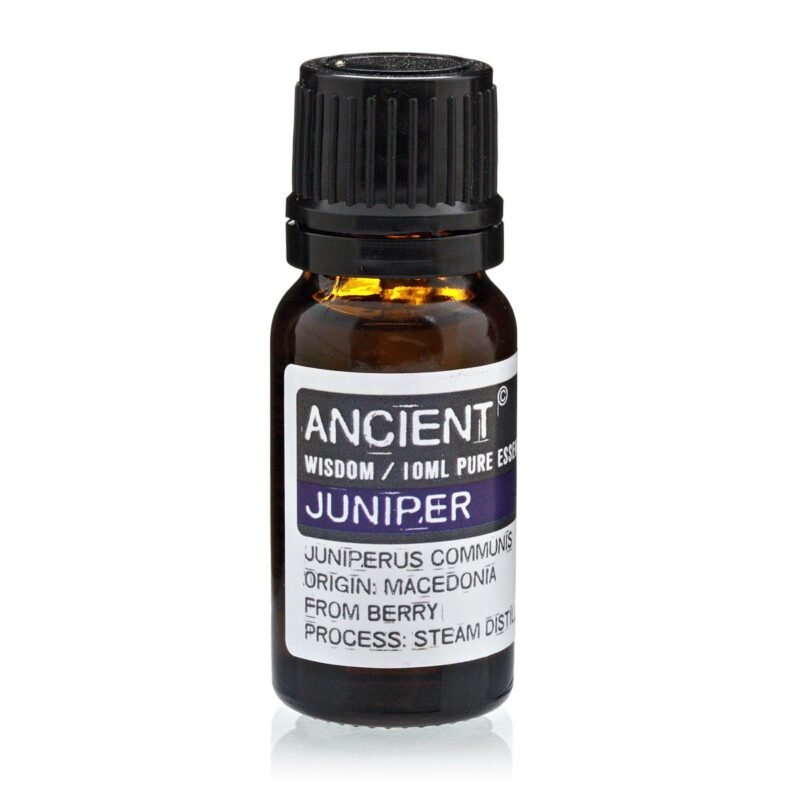
10 ml Juniperberry Essential Oil
£4.95Latin Name : Juniperus Communis
Part Of Plant Used : Berry
Source : Macedonia
Extraction Method : Steam Distillation
Extracted from the berries of a coniferous tree, Juniper Berry Essential Oil is recognized for its versatile uses and benefits. The scent of Juniper Berry oil is woody, spicy, and clean. When used for its aroma, Juniper Berry essential oil has a calming and grounding effect and can also be diffused to help cleanse and purify the air.
Juniper berries are a natural antiseptic, as is the essential oil. A room mist/air freshener made with Juniper Berry Essential Oil may help to kill airborne germs.
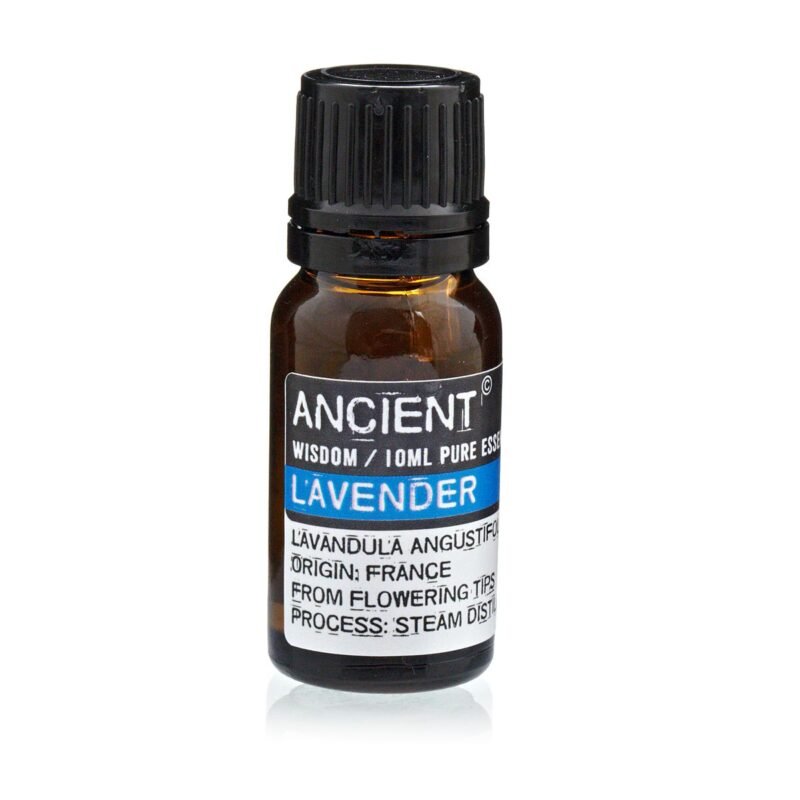
10 ml Lavender Essential Oil
£2.80Latin Name : Lavandula Angustifolia
Part of Plant Used : Flowering Tips
Origin: France
Extraction Method : Steam Distillation
Lavender has been used and cherished for centuries for its unmistakable aroma and myriad benefits. In ancient times, the Egyptians and Romans used Lavender for bathing, relaxation, cooking, and as a perfume. Its calming and relaxing qualities, when taken internally, continue to be Lavender’s most notable attributes.
Applied topically, Lavender is frequently used to reduce the appearance of skin imperfections. Add to bath water to soak away stress or apply to the temples and the back of the neck. Add a few drops of Lavender to pillows, bedding, or bottoms of feet to relax and prepare for a restful night’s sleep. Due to Lavender’s versatile properties, it is considered the must-have oil to have on hand at all times.
Uses
Add a few drops of Lavender Oil to pillows, bedding, or bottoms of feet at bedtime.
Keep a bottle of Lavender on hand to soothe occasional skin irritations.
Freshen your linen closet, mattress, car, or the air by combining Lavender with water in a spray bottle.
Directions for Use
Diffusion: Use three to four drops in the diffuser of your choice.
Topical use: Apply one to two drops to desired area. Dilute with our wholesale Fractionated Coconut Oil to minimize any skin sensitivity.
Cautions
Possible skin sensitivity. Keep out of reach of children. If you are pregnant, nursing, or under a doctor’s care, consult your physician. Avoid contact with eyes, inner ears, and sensitive areas.
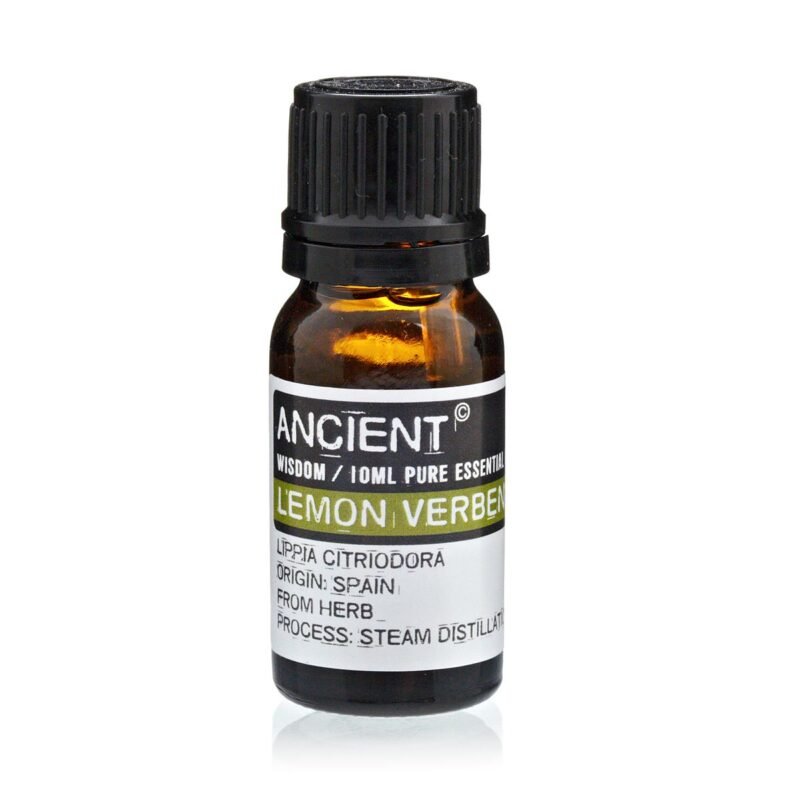
10 ml Lemon Verbena Essential Oil
£3.60Latin Name : Aloysia Triphylla
Part Of Plant Used : Herb
Source : Spain
Extraction Method : Steam Distillation
Emotionally and energetically, this Lemon Verbena Essential Oil can help relieve anxiety and depression. Its sedative and aphrodisiac properties make it helpful for relaxing the mind and uplifting and improving one's mood.
Using lemon verbena essential oil is a popular herbal remedy with a stimulating scent, and has a wide range of potential health benefits when used properly.
With its expectorant properties, verbena oil is often used to loosen phlegm, clear congestion and soothe the associated pain of a hacking cough. What’s more, the high citral content means it can often kill the bacteria found in mucus.
The physical relief induced by verbena is well-established, but it has many mentally therapeutic benefits too. Verbena’s presence in body mists, massage oils, candles and diffusers can inspire and stimulate the mind, providing sweet relief from the lethargy and monotony of the daily grind.
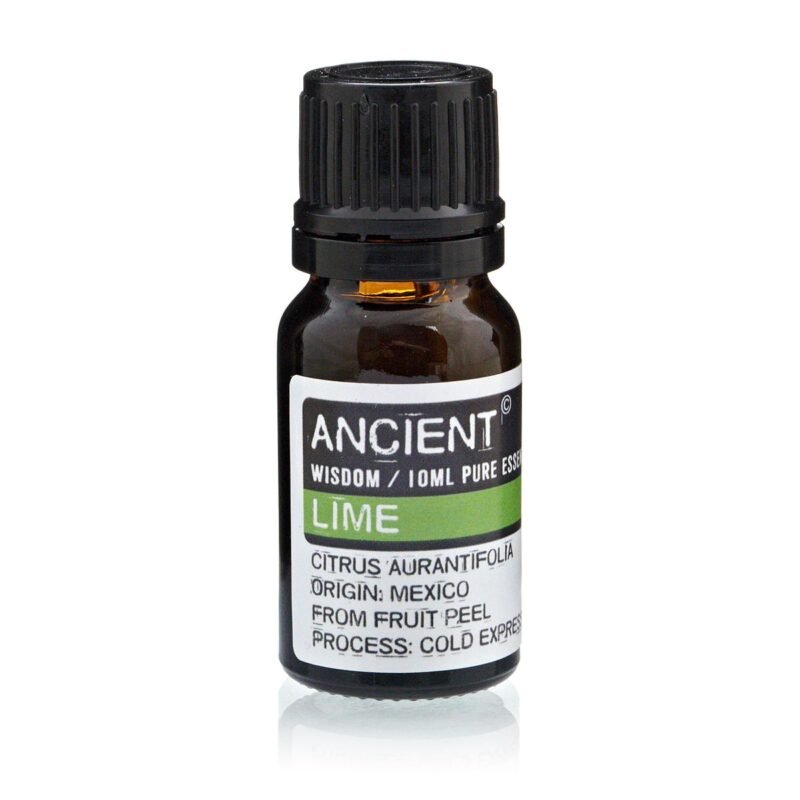
10 ml Lime Essential Oil
£2.90Latin Name : Citrus Aurantifolia.
Part Of Plant Used : Fruit Peel.
Source : Mexico.
Extraction Method : Cold Expression.
This Lime Essential Oil is obtained from Citrus aurantifolia, also known as Mexican or West Indian lime, as well as sour lime. The oil is extracted from the peel of the unripe skin by cold expression or from the peel and/or the whole ripe fruit by steam distillation. Lime oil has a sharp, citrus smell that immediately perks up one's mood on smelling it, and is pale yellow to light olive in colour.
Lime oil, when used in an oil burner, stimulates a tired mind and helps ease anxiety, apathy, and depression. It is useful to reduce fevers associated with colds, sore throats, and flu. It increases immunity while easing coughs, bronchitis, sinusitis, and asthma. It is said to be helpful for arthritis,
rheumatism and poor circulation, as well as for obesity and cellulite. This oil is good for the skin; it reduces oiliness and acne, helps with herpes, insect bites and cuts. However, the oil that is obtained by cold expression (as opposed to steam distillation) can cause photosensitivity and irritate the skin.
Limes are originally from Asia, but they are now grown in most warm countries like Italy, the West Indies, and the Americas. The lime is green when raw and ripens to yellow, and usually measures about two inches in diameter. It was introduced into Europe by the Moors and from there it migrated to the Americas. The lime is said to have a lower Vitamin C content than lemons do. People often carried limes on long ship journeys to prevent sailors getting scurvy from Vitamin C deficiency.
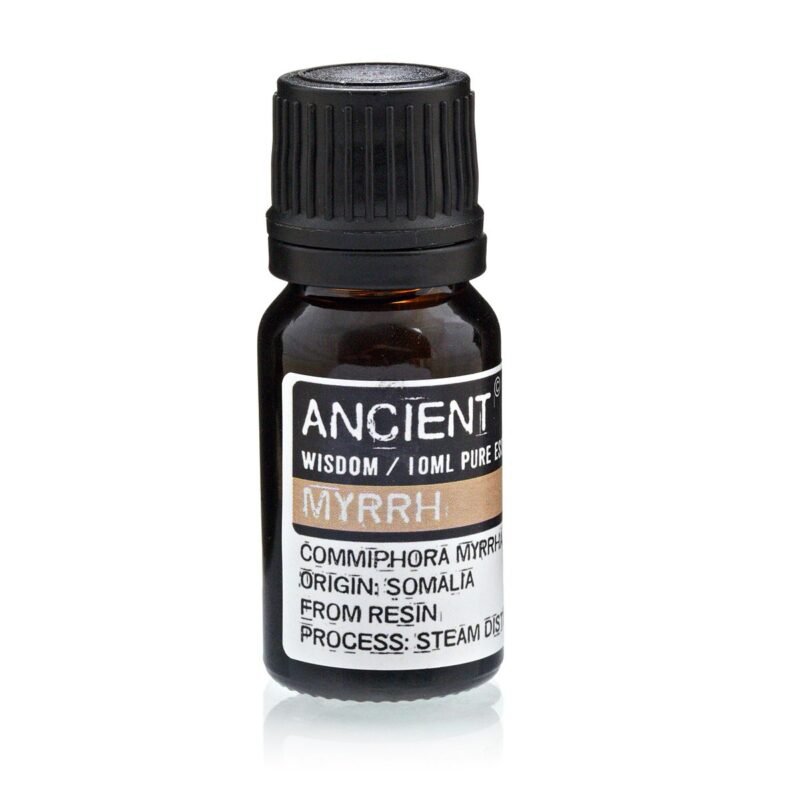
10 ml Myrrh Essential Oil
£21.00Latin Name : Commiphora Myrrha
Part Of Plaant Used : Resin
Source : Somalia
Extraction Method : Steam Distillation
Myrrh has been used since ancient times as perfume and incense for medicinal and sacred purposes. Myrrh Essential Oil is a staple in aromatherapy and is believed to ease coughs and colds, soothe digestive discomfort, and boost immunity.
When used in aromatherapy, myrrh is said to help treat or prevent the following health problems as colds, cough, insomnia or sore throat.
In addition, myrrh essential oil is said to reduce inflammation, stimulate the immune system, alleviate pain, and promote wound healing.
Sometimes used as an ingredient in skincare products, myrrh essential oil is also purported to reduce the appearance of wrinkles.
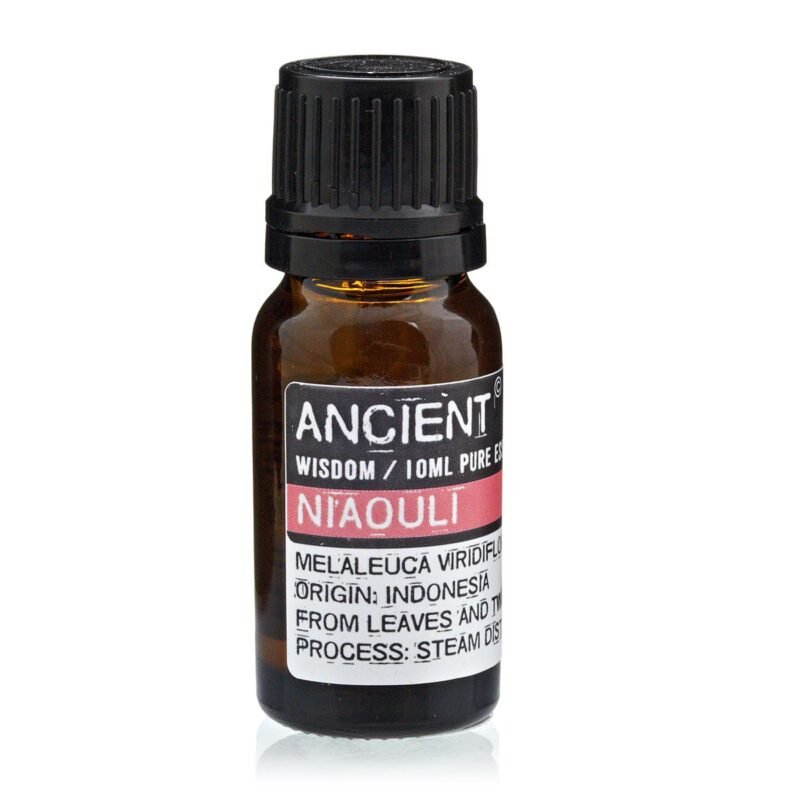
10 ml Niaouli Essential Oil
£3.50Latin Name : Melaleueca Viridiflora
Part Of Plant Used : Leaves & Twigs
Source : Indonesia
Extraction Method : Steam Distillation
Niaouli Essential Oil isn't the greatest smelling essential oil. What it lacks in aromatic appeal, however, it makes up for in its therapeutic benefits. It's an excellent choice for use with respiratory concerns, skin infections and acne.
Aromatically, Niaouli Essential Oil is generally not considered a pleasant essential oil. The aroma is camphorous, earthy and a bit harsh. It's never a good idea to form an opinion of the aroma of an essential oil by simply smelling it straight from the bottle.
The pain-relieving property of this oil makes it a very good analgesic. It eliminates pain by inducing numbness in the nerves and by desensitizing the area. It is very effective in relieving the pain of headaches, migraines, toothaches, earaches, and muscle and joint pain, as well as pain due to sprains.
This oil stimulates the circulation of the blood and lymph, thereby preventing the accumulation of uric acid in the joints and bringing warmth to various parts of the body. These two factors together help give relief from rheumatism, arthritis, and gout.
Open wounds are prone to infections since bacteria, fungi, and other microbes have a very good chance of getting into the bloodstream through these wounds. Bacteria also reside in the urogenital tracts, colon, prostate, intestines, and kidneys and cause infections of the urethra and other sensitive body parts. The essential oil of Niaouli, thanks to its antiseptic properties, can inhibit bacterial growth in those areas and gives good protection against sepsis, tetanus, and infections of the other internal organs.
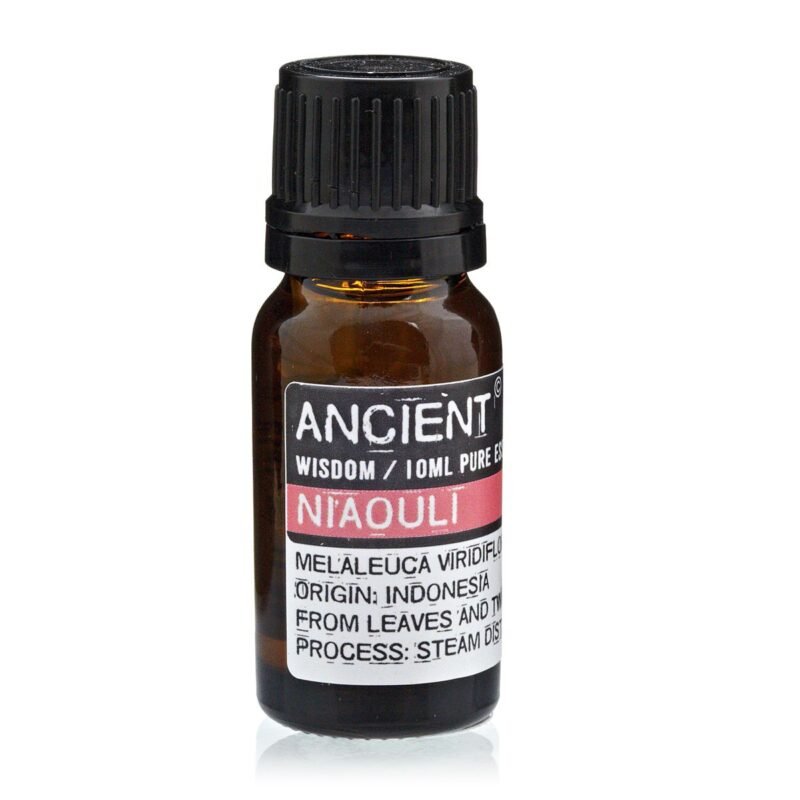
10 ml Niaouli Essential Oil
£3.50Latin Name : Melaleueca Viridiflora
Part Of Plant Used : Leaves & Twigs
Source : Indonesia
Extraction Method : Steam Distillation
Niaouli Essential Oil isn't the greatest smelling essential oil. What it lacks in aromatic appeal, however, it makes up for in its therapeutic benefits. It's an excellent choice for use with respiratory concerns, skin infections and acne.
Aromatically, Niaouli Essential Oil is generally not considered a pleasant essential oil. The aroma is camphorous, earthy and a bit harsh. It's never a good idea to form an opinion of the aroma of an essential oil by simply smelling it straight from the bottle.
The pain-relieving property of this oil makes it a very good analgesic. It eliminates pain by inducing numbness in the nerves and by desensitizing the area. It is very effective in relieving the pain of headaches, migraines, toothaches, earaches, and muscle and joint pain, as well as pain due to sprains.
This oil stimulates the circulation of the blood and lymph, thereby preventing the accumulation of uric acid in the joints and bringing warmth to various parts of the body. These two factors together help give relief from rheumatism, arthritis, and gout.
Open wounds are prone to infections since bacteria, fungi, and other microbes have a very good chance of getting into the bloodstream through these wounds. Bacteria also reside in the urogenital tracts, colon, prostate, intestines, and kidneys and cause infections of the urethra and other sensitive body parts. The essential oil of Niaouli, thanks to its antiseptic properties, can inhibit bacterial growth in those areas and gives good protection against sepsis, tetanus, and infections of the other internal organs.
